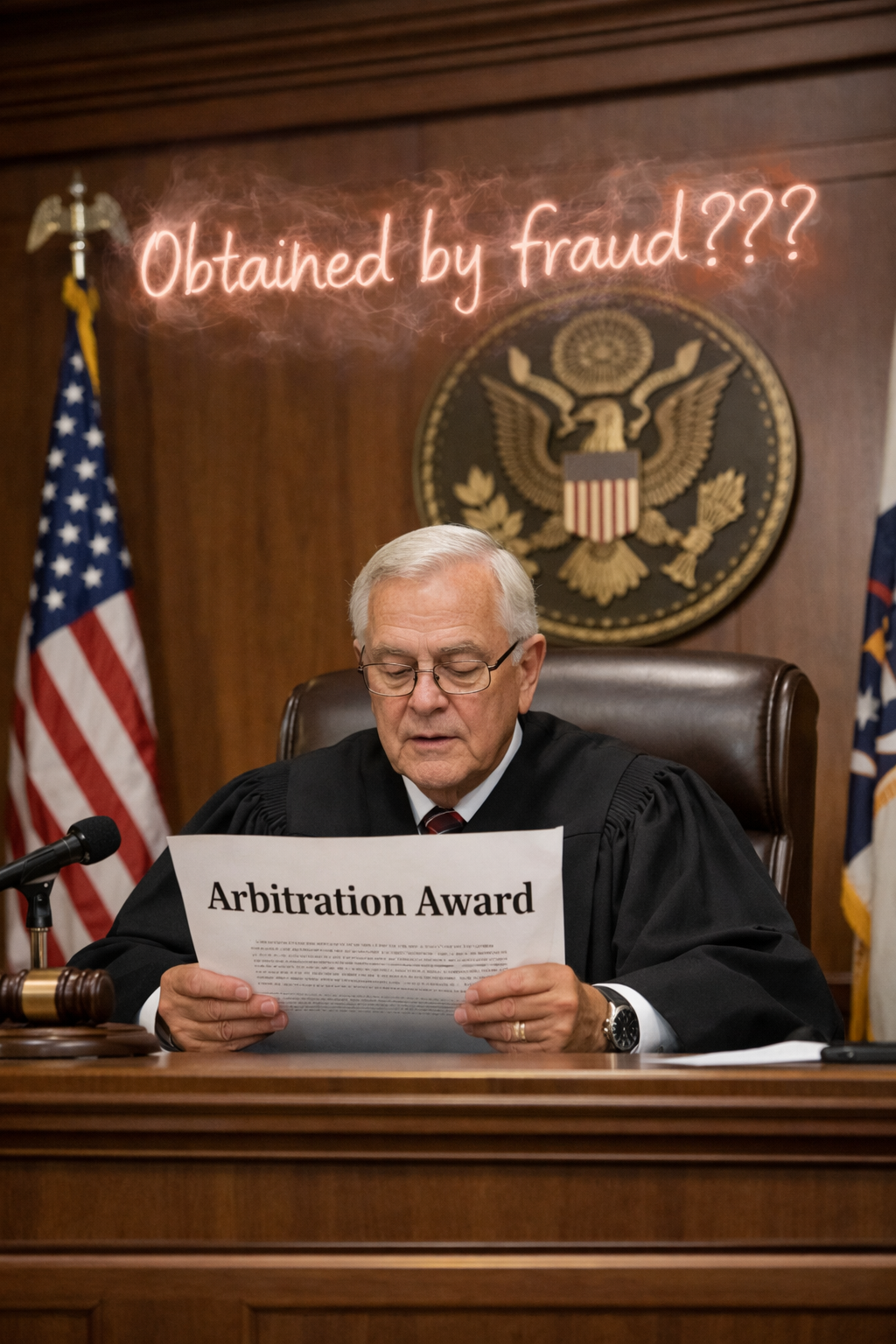
Fraud in obtaining an award: a rare bird
I wrote a book on arbitrating patent disputes a while ago.[i] One of the book’s goals was to explain arbitration doctrine to lawyers who are familiar with Federal litigation but not so much with arbitration. One thing to understand is how narrow the grounds for vacating an arbitration award are. Among those grounds is that the award was procured by fraud.[ii] A court may vacate an award procured by fraud that is material and not discoverable with due diligence. When I went looking for examples of cases vacating arbitration awards for fraud, there were very few. But there is now a new example: Eletson Holdings Inc. v. Levona Holdings Ltd, No. 23-cv-7331(S.D.N.Y. Jan. 12, 2026). In that case, the court vacated a nine-figure arbitration award on fraud grounds. Let’s take a look.
The dispute
The arbitration arose out of a shipping joint venture and, more specifically, control over preferred equity. The dispositive issue was whether Eletson had validly exercised a purchase option that shifted control of the company. Eletson won. The arbitrator accepted its account of how the option had been exercised and entered a substantial award. The fraud issue appeared after the award was entered. Levona obtained documents through related proceedings — most notably a matter in bankruptcy court — that had not been produced in the arbitration and sought to overturn the award for fraud.
The withheld documents
The district court’s analysis centers on what it calls the “Withheld Documents.” These documents went directly to the dispositive issue and to the credibility of the witnesses whose testimony the arbitrator credited. The court found that Levona had attempted to obtain these materials during the arbitration and related proceedings, but Eletson refused to produce them. The court found that Eletson took advantage of the fact that “it alone knew what the documents said” while arguing that there was no “cognizable argument” for their relevance and that there was “no provision for discovery” in the district court proceeding. The court also emphasized the significance of the documents once they had come to light. The materials were “highly relevant both to the arbitration and to the proceedings before [the District Court]” and “tend[ed] to show fraud in the arbitration proceeding.” It also found Eletson’s witnesses gave false testimony at the hearing. It is worth noting here that the facts of the case are complex, with many people and entities involved, related legal proceedings, and discovery disputes aplenty leading up to the hearing on the motion to vacate. But the fraud came out, and the district court was not about to put up with it no matter how complicated the case was.
What the court found
In resisting the motion to vacate the award, Eletson argued that arbitration is streamlined, that discovery is limited, and that Levona was trying to relitigate the case using tools it did not have in the arbitration. None of that excused Eletson’s withholding these critical documents.
The court reasoned that the relevant question is not how much discovery was available, but whether the arbitration went ahead on a materially incomplete record. It analyzed the issue through the elements of fraud under the FAA: materiality, due diligence, and whether the conduct deprived the opposing party of a fair opportunity to present its case. The court concluded that those elements were satisfied by the facts before it. The withheld documents went to the central issue, Levona had pursued them without success, and their absence affected the evidence presented to the arbitrator.
The problem was not the limits of arbitration discovery. It was that one party had material evidence but withheld it despite legitimate requests to get it. The case illustrates that streamlined procedures do not excuse withholding material evidence. If anything, when the process depends on a narrower record, the obligation not to manipulate that record becomes more important. The court vacated the award under FAA § 10(a)(1).
It’s not over yet
The case did not end with vacatur. In later orders, the court applied the crime-fraud exception to attorney-client privilege, finding probable cause to believe certain communications were intended to facilitate or conceal fraudulent conduct. That allowed discovery into materials that would ordinarily be privileged. At that point, the case moved beyond vacatur and into an inquiry into misconduct.
And so . . .
It is difficult to vacate an arbitration award based on a claim that it was obtained by fraud. But, in this case, proof of materiality, diligence, and a record showing that key evidence was unavailable during the arbitration combined to show the award was obtained by fraud and thus had to be vacated. Parties in arbitration should take this case to heart. Arbitration may be less formal. But producing critical documents is not optional.
_____________________________________
[i]Arbitrating Patent Disputes: A Practical Guide, available from ABA Books and Amazon.
[ii] “[T]he United States court in and for the district wherein the award was made may make an order vacating the award upon the application of any party to the arbitration . . . where the award was procured by corruption, fraud, or undue means . . .” 9 U.S.C. § 10(a)(4).